In the hills of Bokkos Local Government Area, Plateau State, two communities — one predominantly Berom, the other Fulani — had been locked in a cycle of reprisal attacks that left twelve people dead and hundreds displaced over three years. The Nigerian government had tried. The police had tried. Nothing held.
In March 2024, ENPUAI facilitators travelled to Bokkos and spent four days doing nothing but listening. They spoke to elders in their compounds, to young men in the market, to women fetching water at dawn. They mapped the real grievances: a disputed water source, a cattle corridor that had been rerouted without consultation, a land boundary drawn during the colonial era that had never been formalised.
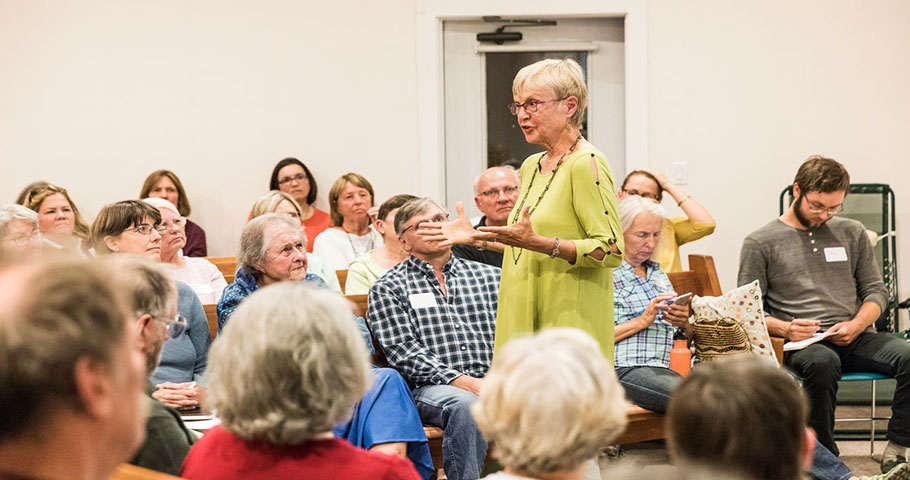
On the fifth day, ENPUAI convened a structured dialogue. Forty-two people sat in a circle — twenty Berom, twenty-two Fulani. Each person spoke for three uninterrupted minutes. No rebuttals. Just listening. By the third round, people were nodding. By the end, a Community Coexistence Agreement had been drafted, signed, and witnessed by the Bokkos District Head.
The agreement addressed all three root causes: a shared access schedule for the water source, a jointly managed cattle corridor, and a request submitted to the Plateau State government to formalise the boundary through survey.
Six months later, the community reported zero violent incidents. Three families that had fled returned. The cattle corridor is now jointly maintained. And the women of both communities have formed a cooperative that sells produce at the same market stall.
“Before ENPUAI, I would not walk through that area at night. Now my daughter goes to school through there every day.” — Hauwa Saleh, Fulani community elder, Bokkos
Peace is not an event. It is a practice. Bokkos is proof that when communities are given a structured, safe space to be heard — and when the root causes of conflict are honestly named — Nigerians choose peace every time.